While parts of Europe have spent decades debating modest infrastructure projects. Often bogged down by environmental reviews, political compromises, and endless revisions, China is showing what decisive action looks like, moving from approval to execution on a scale that few others even attempt.
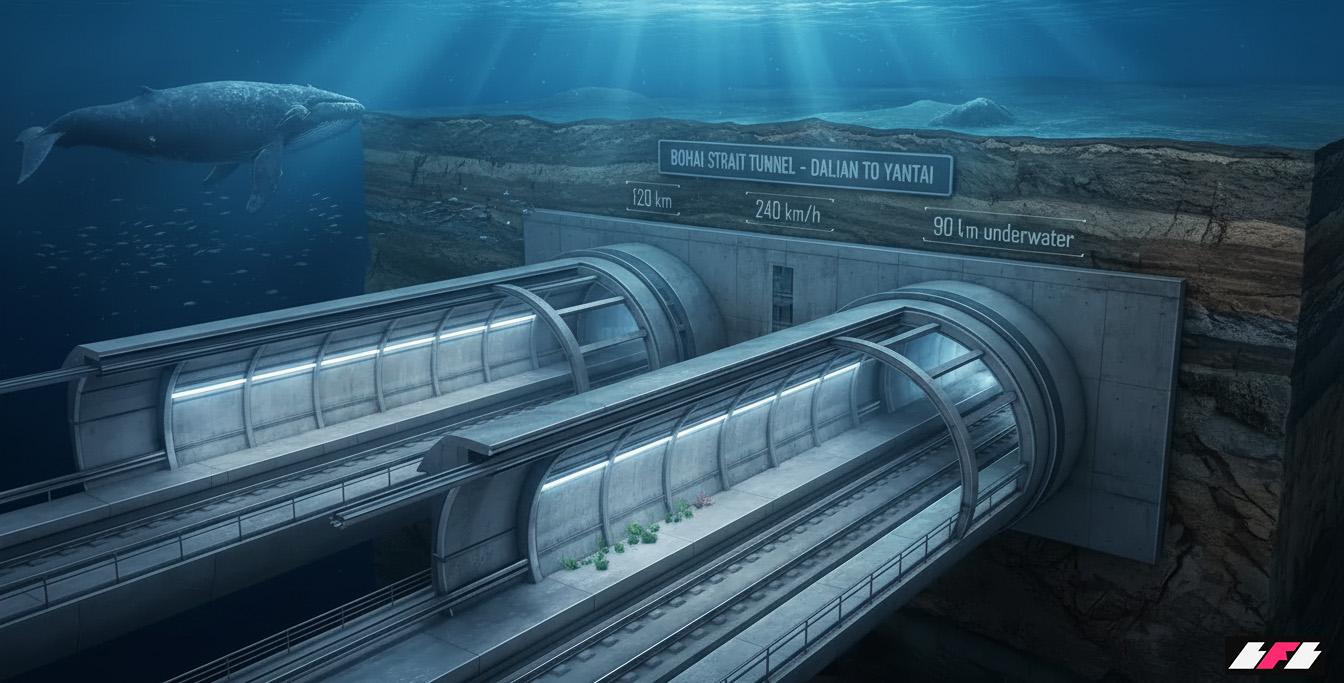
Beijing has given the green light for one of the most ambitious infrastructure projects ever attempted: a 120-kilometer railway tunnel running straight beneath the sea. Estimated cost: €23 billion.

From 8 Hours of Travel to 40 Minutes
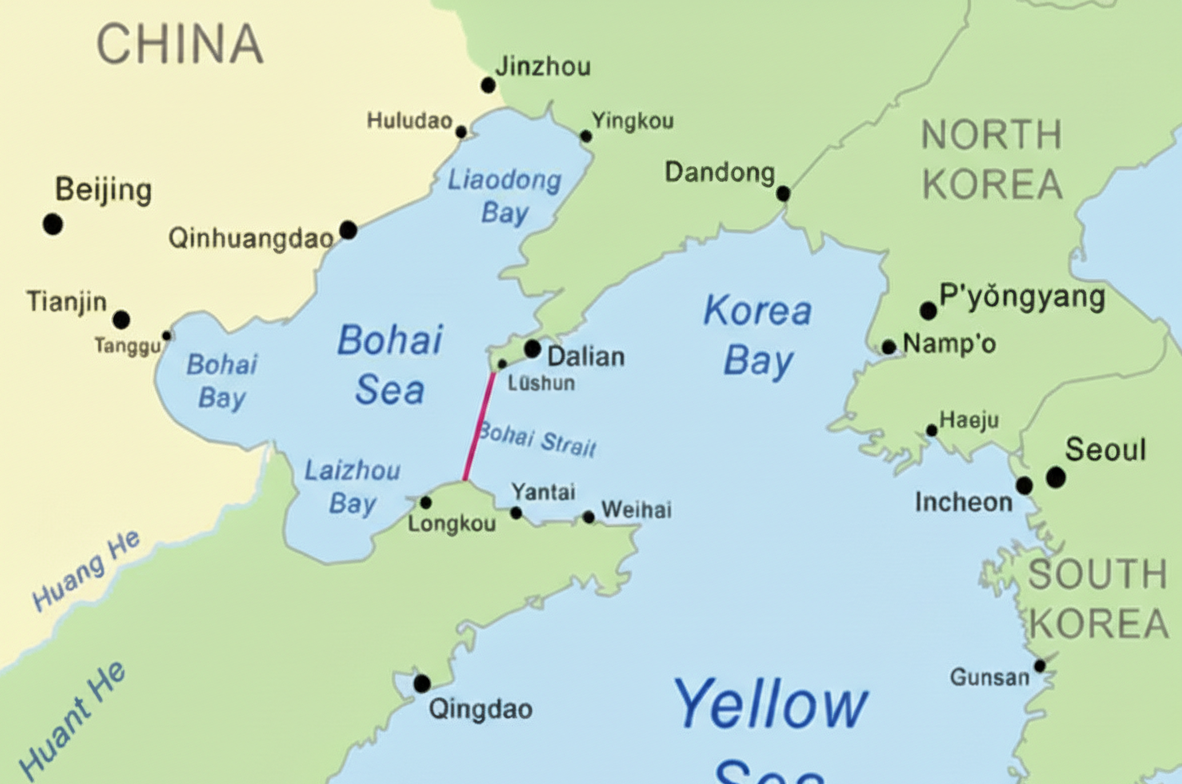
The project, known as the Bohai Strait Tunnel, will connect the cities of Dalian and Yantai. At present, crossing the Bohai Strait requires a long detour or a ferry journey that can take six to eight hours. Once completed, the tunnel will cut that travel time down to just 40 minutes.
The concept is as straightforward as it is bold: two parallel tunnels beneath the seabed, designed for high-speed trains traveling at up to 240 km/h. That is faster than trains through the Channel Tunnel. With a total length of more than 120 kilometers—around 90 kilometers of it underwater—it is set to become the longest undersea tunnel in the world.
€23 Billion and Up to 15 Years of Construction
The price tag, 220 billion yuan (approximately €23 billion), is significant but modest by Chinese standards considering the scale and economic impact. Construction is expected to take between 10 and 15 years—and when China commits to a timeline, it usually delivers.
This is not a prestige project designed for headlines. It is driven by economic necessity. The tunnel is intended to relieve pressure on major rail corridors around Beijing and Tianjin while directly linking industrial regions in northeastern China with key economic zones further south. In effect, it will function as a new artery for the Chinese economy.
Naturally, the project comes with serious technical challenges. The tunnel will pass through a seismically active zone. China’s approach is pragmatic: advanced monitoring systems, watertight safety compartments, and modern construction techniques are built into the design.
In contrast, large infrastructure projects elsewhere often stall due to environmental reviews, political infighting, or legal challenges. China, by comparison, pushes forward with capital, engineering, and speed. The contrast is striking. While many ambitious infrastructure plans remain stuck on paper in other parts of the world, China is preparing to break ground on a tunnel forty times longer than projects that have been debated for decades.

About the Author