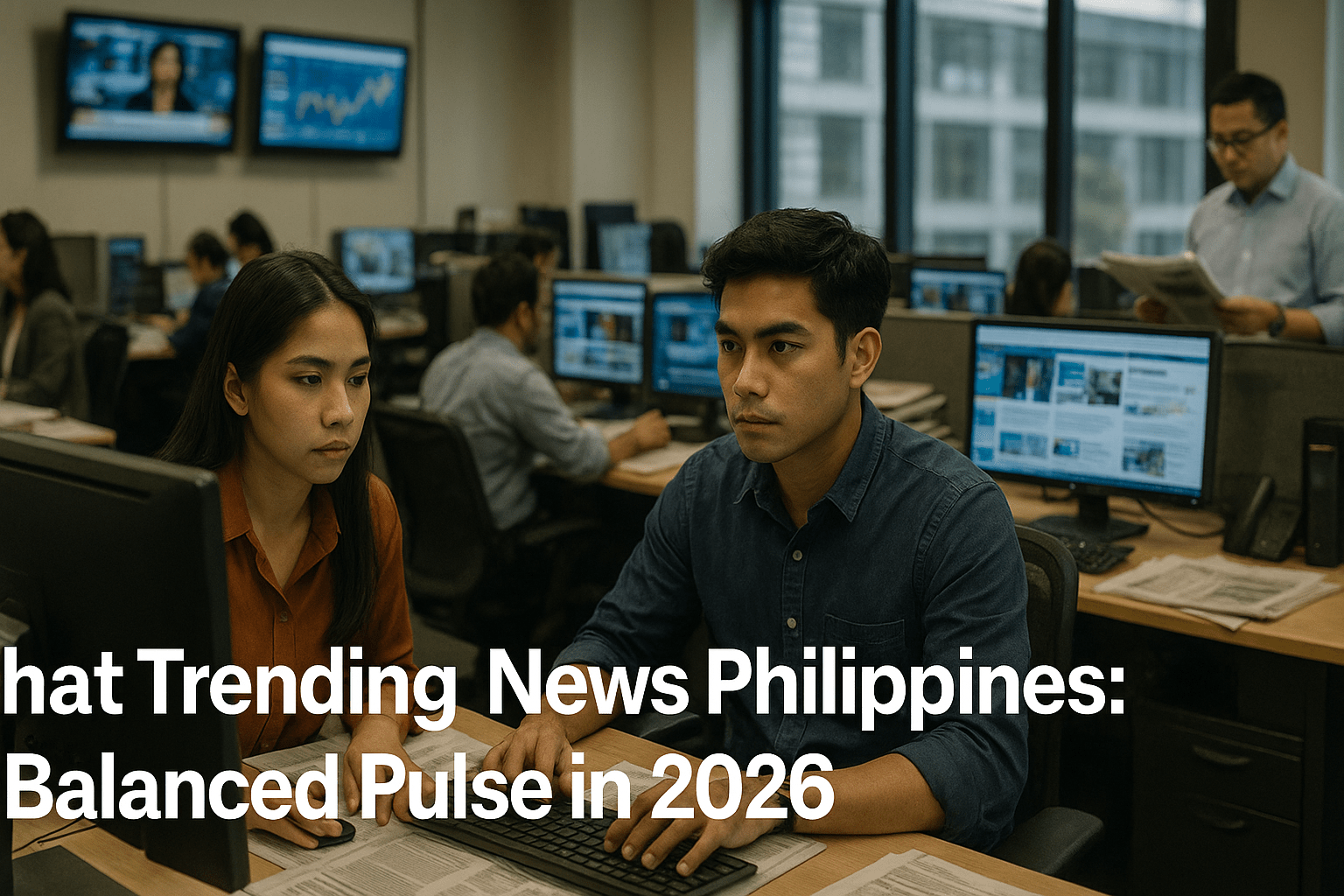
Newsroom emphasizing balanced coverage of Trending News Philippines.
Updated: April 9, 2026
Across the Philippines, audiences increasingly turn to what Trending News Philippines to gauge the day’s priorities, from urban centers to rural towns. The phrase operates like a pulse check for public mood, but it also invites questions about speed, sourcing, and accountability. This analysis examines how trending content emerges, who it serves, and what readers can do to stay informed without falling into hype.
Shaping the Pace: How Trending Content Moves in the Philippines
In a media landscape where mobile devices are the primary gateway to information, a single clip or post can spread faster than a newsroom can verify. In the Philippines, platforms such as TikTok, Facebook, YouTube, and microblogging sites act as a relay race where drafts, screenshots, and user comments quickly become headlines. Language variants—Filipino, Cebuano, Ilocano, and others—mean that content can resonate regionally before it travels nationally, creating a mosaic rather than a single story. This speed-driven environment shapes what counts as Trending News Philippines, often privileging immediacy over context. Newsrooms, advertisers, and platforms respond by prioritizing timely updates, captions, and notifications that keep viewers engaged, sometimes at the expense of deeper explanation. For audiences, this means that the first version of a story may be incomplete, and follow-up pieces become essential to full understanding.
Local Context: Reading Habits and Trust
Philippine readers balance online feeds with traditional outlets, community radios, and local journalists whose reputations are built on proximity to events. In many regions, official channels from the government or civil society groups provide crucial context on weather, disasters, or public health. Yet the digital ecosystem often blends these updates with user-generated content that may lack verification. This is where readers become active filters: cross-checking posts against recognized outlets, noting author credentials, and watching for updates that correct earlier claims. The Philippine media ecosystem also reflects regional diversity: what trending in Metro Manila may not reflect experiences in Mindanao or the Visayas. Understanding this nuance is essential when analyzing what counts as Trending News Philippines, as it helps prevent overgeneralization from a single viral clip.
Verification, Bias, and Platform Roles
Verification remains a shared responsibility among platforms, editors, and the public. Fact-checking initiatives, official alerts, and transparent sourcing help, but algorithms can misprioritize content based on engagement signals rather than reliability. In the Philippines, where communities often rely on mobile-first updates during flooding, power outages, or election cycles, the risk of misinformation expands when users trust sensational framing or unverified screenshots. Editors must balance speed with accuracy, providing readers with clear attributions, dates, and links to primary sources. Platform policies around misinformation and disinformation play a role, but so do user norms—what is accepted as credible varies across communities. This section does not assign blame; it highlights the need for checks and balance as the media ecosystem evolves, especially for what Trending News Philippines encompasses regionally and nationally.
Actionable Takeaways
- Diversify sources across platforms and languages to avoid a single-voice narrative.
- Check timestamps, authors, and URLs before sharing; follow up on updates and corrections.
- Prioritize official channels for critical information (e.g., weather alerts, public health advisories) to verify rapidly evolving situations.
- Practice media literacy: question sensational framing, recognize opinion vs. reporting, and track the evolution of a story.
- Encourage newsroom transparency about sourcing and verification when covering Trending News Philippines to build public trust.
Source Context
For readers seeking background on how trending content and platform dynamics influence coverage, the following sources were consulted to inform this analysis.
From an editorial perspective, separate confirmed facts from early speculation and revisit assumptions as new verified information appears.
Track official statements, compare independent outlets, and focus on what is confirmed versus what remains under investigation.
For practical decisions, evaluate near-term risk, likely scenarios, and timing before reacting to fast-moving headlines.
Use source quality checks: publication reputation, named attribution, publication time, and consistency across multiple reports.
Cross-check key numbers, proper names, and dates before drawing conclusions; early reporting can shift as agencies, teams, or companies release fuller context.