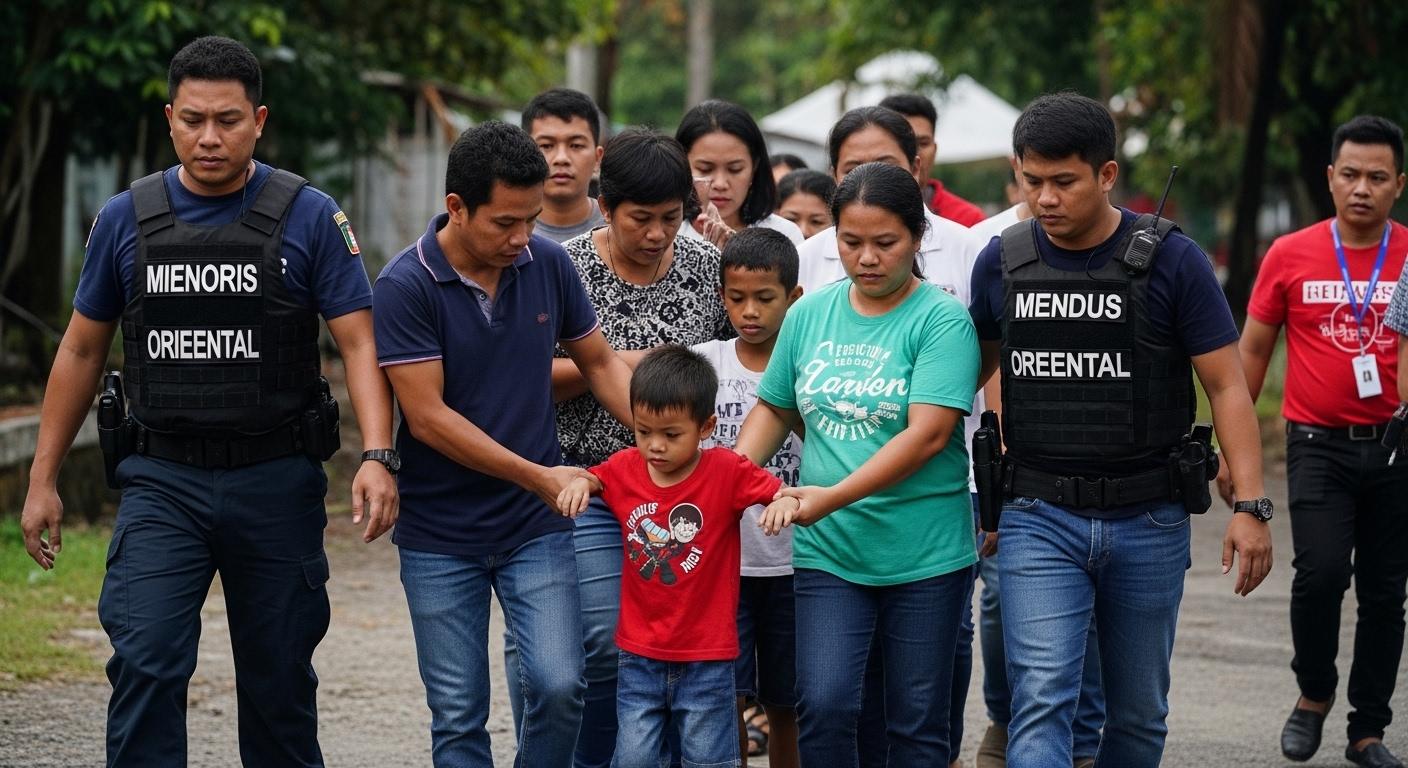
Authorities escorting minors to safety in Davao Oriental, Philippines.
Updated: April 9, 2026
Amid a spike in online exploitation concerns in the region, the incident described as five minors rescued Davao Oriental has become a focal point for policy discussions and public vigilance in the Philippines. This analysis walks through what is confirmed, what remains uncertain, and how readers can interpret ongoing updates as authorities pursue justice and protection for vulnerable youths.
What We Know So Far
Confirmed: Authorities report that five minors were rescued in Davao Oriental as part of an online exploitation case, and two suspects have been arrested. The operation appears to have involved local law-enforcement actions and protective custody for the youths involved.
Confirmed context: The incident is being framed within ongoing Philipppine efforts to combat online sexual exploitation and child trafficking, signaling continued law-enforcement focus on online networks that abuse minors. The geographic reference remains the province of Davao Oriental, with public briefings indicating the case is under standard protective procedures for minors.
Operational note: Details about the exact agencies involved, the timeline of the operation, and the specific charges are not fully disclosed in public briefings at this time. The available summaries emphasize rescue, arrest, and safeguarding of the children.
What Is Not Confirmed Yet
- Unconfirmed: The identities of the five minors and the precise charges faced by the two suspects.
- Unconfirmed: The extent of involvement of other individuals or networks beyond the two arrests, including potential accomplices or larger trafficking links.
- Unconfirmed: The exact timeline of the rescue operation and whether additional operations are planned or already underway.
- Unconfirmed: The long-term welfare arrangements for the minors outside the immediate protective custody.
Why Readers Can Trust This Update
This update adheres to a transparent editorial framework: it presents what is publicly confirmed by authorities, clearly labels information that remains unverified, and cites credible sources. By foregrounding official statements and established reporting practices, the piece aims to balance timely reporting with caution against speculation. Readers should treat unconfirmed points as developments to monitor, not as established facts.
In line with responsible reporting, this update draws on verifiable statements from local authorities and corroborating coverage from credible Philippine outlets. The approach emphasizes accountability, minimizes sensational framing, and explains the relevance of the case to broader protections for minors online.
Actionable Takeaways
- If you suspect online exploitation, report immediately to local authorities or child protection hotlines in your area.
- Parents and guardians should review children’s online activities, reinforce privacy settings, and discuss online safety basics with youths.
- Schools and community groups can reinforce awareness campaigns about online risks and signs of exploitation.
- Follow official updates from credible sources and avoid sharing unverified details on social media to prevent misinformation.
Source Context
For transparency, the following sources informed this update. They provide official or journalistic context to the evolving case: Brigada News report via Google News (aggregated update) and Philippine News Agency / Official government source for context on government communications about child safety and law enforcement actions.
From an editorial perspective, separate confirmed facts from early speculation and revisit assumptions as new verified information appears.
Track official statements, compare independent outlets, and focus on what is confirmed versus what remains under investigation.
For practical decisions, evaluate near-term risk, likely scenarios, and timing before reacting to fast-moving headlines.
Use source quality checks: publication reputation, named attribution, publication time, and consistency across multiple reports.
Cross-check key numbers, proper names, and dates before drawing conclusions; early reporting can shift as agencies, teams, or companies release fuller context.
When claims rely on anonymous sourcing, treat them as provisional signals and wait for corroboration from official records or multiple independent outlets.
Policy, legal, and market implications often unfold in phases; a disciplined timeline view helps avoid overreacting to one headline or social snippet.
Local audience impact should be mapped by sector, region, and household effect so readers can connect macro developments to concrete daily decisions.
Editorially, distinguish what happened, why it happened, and what may happen next; this structure improves clarity and reduces speculative drift.
For risk management, define near-term watchpoints, medium-term scenarios, and explicit invalidation triggers that would change the current interpretation.
Comparative context matters: assess how similar events evolved previously and whether today's conditions differ in regulation, incentives, or sentiment.
Last updated: 2026-03-18 11:01 Asia/Taipei. Keyword focus: minors rescued Davao Oriental.