The Role Of Technology In Shaping Future Entertainment A Deep Dive
Updated: April 9, 2026
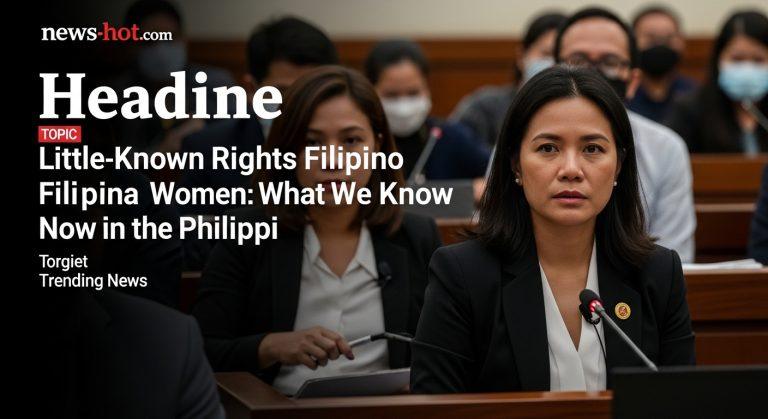
In the Philippines, the discourse around alleged Trending News Philippines has become a weather system in the online public square, where clips from public figures and unsigned videos ignite rapid debates, shaping perceptions and prompting real-world responses.
Context and Causality
Digital information ecosystems in the country are shaped by high mobile penetration and widespread social media use. When a clip or claim triggers curiosity, algorithms push it to new audiences, often before verification can catch up. This dynamic creates a causal chain: rapid exposure, heightened emotional responses, crowd-based correction attempts, and sometimes, lasting reputational or policy consequences. The interplay between creators chasing engagement and platforms measuring it can produce narratives that outpace traditional journalism, especially in a news cycle saturated with memes, excerpts, and clickbait. For readers in the Philippines, the phenomenon referred to as alleged Trending News Philippines is less a single story than a pattern that reappears across issues—ranging from entertainment gossip to public-interest advisories—and it tests the public’s media literacy.
Narrative Framing and Public Perception
People rely on familiar cues when assessing credibility: a speaker’s presence, a well-lit video, or a known brand name. Local language blends—Taglish and regional dialects—can make messages feel closer and more trustworthy, even when facts are thin. This framing matters because trust in the PH information environment travels through social networks as much as through newsroom desks. When controversy erupts, audiences often categorize content as entertainment, news, or civic warning, sometimes blurring lines between categories. The result is a volatile mix where misinterpretation travels faster than formal correction, and where policymakers and platform operators must anticipate cascades of reactions—from online discussions to real-world decisions.
Policy and Platform Dilemmas
Platform moderation in the Philippines sits at the intersection of local public-sphere needs, regional pressures, and the realities of cross-border content. Social media operators face a tough choice: act quickly against potentially harmful misinformation, risking accusations of censorship, or delay moderation to avoid suppressing free expression but risk amplifying damage. The PH context intensifies this tension due to language diversity, urban-rural information gaps, and a vibrant creator economy. Officials and civil society groups advocate for more transparent labeling, faster takedowns of misleading material, and partnerships with local fact-checkers who understand community nuance. For readers, the takeaway is that while no single platform solution fixes everything, visible labeling and timely corrections are part of a broader system of accountability.
Source Context
These sources offer varying angles on virality, economic incentives, and cross-border dynamics that shape online discourse, providing context for readers navigating alleged Trending News Philippines.
Actionable Takeaways
- Verify claims across multiple credible sources before sharing, especially when visuals or audio lack clear context.
- Rely on official statements or established fact-checkers to corroborate viral clips or rumors.
- Pause to consider potential real-world consequences of spreading or amplifying unverified content.
- Support media-literacy initiatives and use platform reporting tools when content seems misleading.
- Encourage transparent labeling and timely corrections from platforms, particularly for locally relevant topics.
From an editorial perspective, separate confirmed facts from early speculation and revisit assumptions as new verified information appears.
Track official statements, compare independent outlets, and focus on what is confirmed versus what remains under investigation.
For practical decisions, evaluate near-term risk, likely scenarios, and timing before reacting to fast-moving headlines.
Use source quality checks: publication reputation, named attribution, publication time, and consistency across multiple reports.
Cross-check key numbers, proper names, and dates before drawing conclusions; early reporting can shift as agencies, teams, or companies release fuller context.
When claims rely on anonymous sourcing, treat them as provisional signals and wait for corroboration from official records or multiple independent outlets.
Policy, legal, and market implications often unfold in phases; a disciplined timeline view helps avoid overreacting to one headline or social snippet.
Local audience impact should be mapped by sector, region, and household effect so readers can connect macro developments to concrete daily decisions.
Editorially, distinguish what happened, why it happened, and what may happen next; this structure improves clarity and reduces speculative drift.