help Trending News Philippines: Why Trending News Philippines Matter
Updated: April 9, 2026
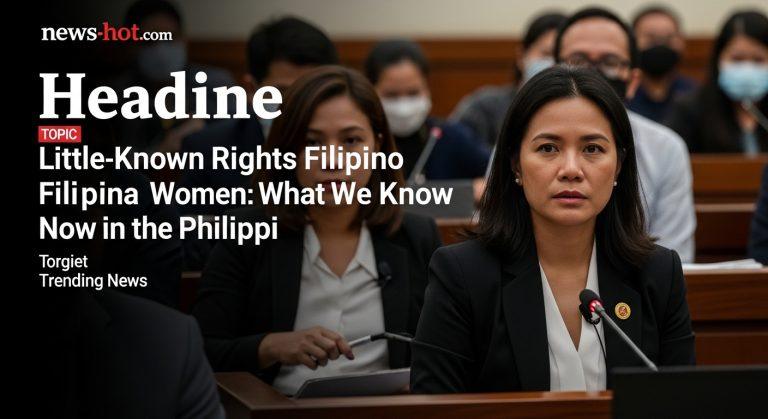
As the Philippines nears the 40th anniversary of People Power, the public conversation is less about street demonstrations and more about timelines, threads, and comment sections. For people Trending News Philippines, the moment reveals how memory, media, and governance intersect in a country where historical milestones migrate from plazas to timelines. This analysis looks beyond headlines to map how digital discourse, official silence, and platform dynamics shape everyday political life, and what ordinary citizens can expect as the public square continues to migrate online.
Echoes of People Power in a Digital Era
Memorial dates and slogans linger in the public sphere, but the battleground has shifted to feeds, memes, and comment threads. The 1986 revolution created a blueprint for peaceful transition that continues to be cited in rallies, anniversaries, and op-eds. Today, that memory travels through short videos and archival clips that thrill or provoke, sometimes blending fact and feeling. Among younger viewers, the event is a form of national mythology—accessible, negotiable, and highly adaptable to contemporary grievances. Political actors may lean on that memory to anchor legitimacy, while critics push back, arguing that a selective retelling can distort lessons. The practical effect in the Philippines is a more fragmented public square where memory competes with new grievances, but also where civic education can reach a broader audience if mediated effectively by trusted local outlets.
Silence in the Palace: Signals and Costs
Official silence can function as a strategic calculus in a country where statements travel fast and misinterpretations travel faster. When the executive branch chooses to speak rarely or with careful distance, it signals a preference for framing issues through alternative channels—briefings, backroom diplomacy, and social-media commentary by critics. The risks are tangible: public trust can erode if audiences read silence as indifference or weakness; policy ambiguity can freeze reform momentum; and journalists may fill gaps with speculation, sometimes amplifying mistrust. Yet silence can also buy time for complex decisions and help avoid impulsive reactions in volatile political weather. The coming months will test whether the administration uses measured, transparent updates to guide public understanding or relies on ad hoc messaging that could feed confusion over priorities.
Platform Power and the Public Sphere
Platform dynamics have become a central hinge in Philippine public life. Short-form video apps compress debates into digestible moments; communities coalesce around trending clips; and voters’ impressions are shaped by an algorithm that prioritizes virality over verification. The bebots phenomenon—where emerging TikTok personas blur lines between authentic civic voice and performative content—illustrates both opportunity and risk: authenticity can mobilize youth engagement, yet automated or scripted personas may distort civic needs or flood feeds with superficial narratives. Journalists and educators face an uphill task to translate fast-moving trends into solid, local-context reporting, while policymakers must consider how to respond to issues surfaced online without amplifying sensationalism. The challenge for the Philippines is to harness the speed of these platforms for accountability while preserving nuance, context, and factual accuracy.
Actionable Takeaways
- Citizens should verify information with multiple credible sources before sharing and prioritize credible outlets that provide local context.
- Media organizations should strengthen local coverage, invest in fact-checking, and translate online trends into reporting that adds context for Filipino audiences.
- Policy makers should communicate clearly and promptly via official channels, using plain language to explain priorities and reforms.
- Educators and civil-society groups should promote media literacy and provide tools for discerning misinformation in fast-moving online debates.
- Community forums and town halls—online or in-person—can help anchor civic participation in verifiable facts and transparent processes.
Source Context
The following sources inform this analysis and provide background on the converging forces in Philippine public life.
- People Power at 40: Silence from Malacañang (MEXC)
- What Is a Bebot and Why Is Everyone on TikTok Turning Into One? (Hypebae via Google News)
- Chevy charge: Spark fun and captivate the thrill (MEXC)
From an editorial perspective, separate confirmed facts from early speculation and revisit assumptions as new verified information appears.
Track official statements, compare independent outlets, and focus on what is confirmed versus what remains under investigation.
For practical decisions, evaluate near-term risk, likely scenarios, and timing before reacting to fast-moving headlines.