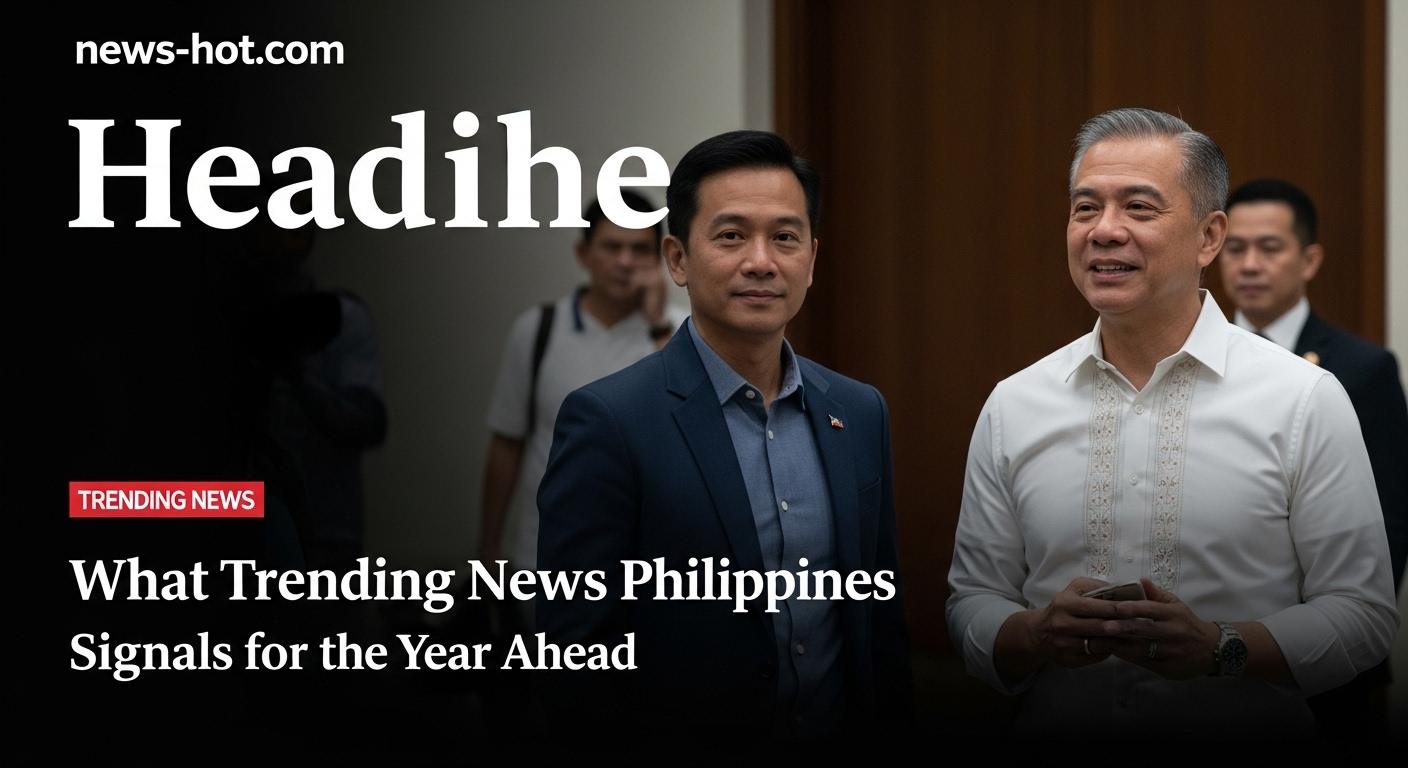
Editorial image showing social media icons over a Philippine cityscape, representing trending news in the Philippines.
Updated: April 9, 2026
What Trending News Philippines continues to shape how Filipinos interpret global events and local developments, making it essential reading for policymakers, business leaders, and everyday commuters alike.
The speed at which topics rise and fall online now sets a baseline for public expectations—from how prices move to how quickly a small business must respond to a post or review. In the Philippines, where data access and smartphone ownership are widespread but unevenly distributed, the digital news cycle often ladders into real-world actions in the shortest possible time. Journalists and educators face the task of translating viral moments into reliable, contextual reportage, while audiences seek both immediacy and accuracy. The result is a newsroom dynamic that prizes clarity, accountability, and practical guidance for readers navigating a busy daily information diet.
Understanding the Pulse of Trending News in the Philippines
As mobile devices become the primary gateway to information for many Filipinos, the rise of short-form formats amplifies both the reach and the risk of misinformation. A single clip or post can spark a nationwide dialogue before traditional outlets have verified the facts. This requires a reporting approach that foregrounds verification steps, offers nuance, and provides concrete takeaways rather than sensational headlines. In this context, what Trending News Philippines represents is less a fixed topic and more a set of patterns: speed, reach, and the ability to shape perception across diverse communities.
For editors, this means balancing speed with accountability. For readers, it means cultivating media literacy: asking who benefits from a viral story, what data underpins a claim, and whether there are credible sources beyond social feeds. The Philippines’ regional diversity also matters—topics may play out differently in urban centers like Manila or Cebu than in rural provinces, where access and trust in institutions may vary. A thoughtful analysis will acknowledge these differences while highlighting common concerns such as price volatility, job security, and access to essential services.
Global Signals vs Local Realities
Global developments—ranging from inflation narratives to international policy shifts—inevitably influence local sentiment. In the Philippines, macro indicators interact with domestic policy choices, exchange-rate movements, and the evolving landscape of digital services. When international markets discuss tighter monetary conditions or rising costs, households can feel the ripple effects in borrowing costs, utility bills, and everyday purchases. Yet the translation is not automatic. Local realities—remittance patterns, seasonal consumer demand, transport and logistics bottlenecks—modulate how global signals arrive at the kitchen table or the storefront shelf.
For analysts, the challenge lies in distinguishing enduring patterns from episodic news. This means asking: Is a trend a reflection of structural changes in the economy, or a temporary reaction to a particular event? Does it manifest across income groups or is it concentrated among a subset of urban consumers? By framing trends with these questions, reporters can provide readers with a clearer sense of what may persist and what may fade as the news cycle moves on.
Impacts on Consumers and Small Enterprises
Trending topics shape consumer confidence and spending behavior in tangible ways. A viral cautionary post about a product line can lift or sink demand within days, prompting businesses to adjust messaging, pricing, or supply chains. For small enterprises, the online conversation can tilt risk perceptions—affecting decisions from hiring to inventory management. The practical implication is that communications excellence matters as much as product quality: brands that respond transparently, post accurate information, and correct misstatements rapidly tend to preserve trust even amid confusion.
For ordinary consumers, the same dynamics underscore the value of deliberate decision-making. In an environment where a single tweet or video can trigger crowd behavior, individuals benefit from routines that slow down impulse purchases, verify claims with multiple sources, and consider longer-term costs rather than reacting to the latest online emphasis. The newsroom, in turn, can serve readers by decoding trends, linking to credible data, and offering checklists for evaluating the reliability of online information.
Actionable Takeaways
- Verify information before sharing or acting on it; consult multiple reputable sources and official statements.
- Assess a trend’s durability by examining data over time instead of relying on a single viral moment.
- For businesses, monitor social-channel conversations but anchor campaigns in transparent pricing and clear terms of service.
- For consumers, budget for uncertainty and resist rushed purchases; practice due diligence on products and services encountered online.
- Policymakers and platforms should promote media literacy, support reliable information ecosystems, and clearly disclose sponsored content.